Showing posts with label soft structured carrier. Show all posts

Thursday, September 10, 2015

Babywearing Saves the Day! Touring Europe with a Toddler in Tow

I was fortunate enough to recently embark on a week-long trip to Europe with my children (ages 6 years and 19 months), husband, and in-laws. In a period of nine days, we experienced three countries, four cities, two transatlantic flights, two shorter flights, two train rides between cities, and rides on trams, subway trains, water buses, and a gondola. We visited countless museums and churches, ascended bell towers, and ate a lot of gelato.  We didn’t bring a stroller, carseat, or any other baby gear except a soft-structured carrier and a pouch sling. The ways in which babywearing  helped make this trip possible and enjoyable are too great to innumerate, but here are the top ways babywearing made this an awesome, doable trip.

With toddler in SSC about to climb some stairs at the Doge’s Palace in Venice, Italy

1. Stairs, stairs, and more stairs:  As many know, Europe has a lot of stairs. Every few feet in Venice, one must cross a bridge with stairs. There are stairs—and often no easy access to elevators—in subway stations, train stations, and within museums. We even boarded the huge airplane for our flight back to US from the tarmac… using stairs.  While a free-ranging toddler (or one trying to wriggle free from your arms) or a stroller are less than ideal in these settings, a carrier makes stairs a non-issue.
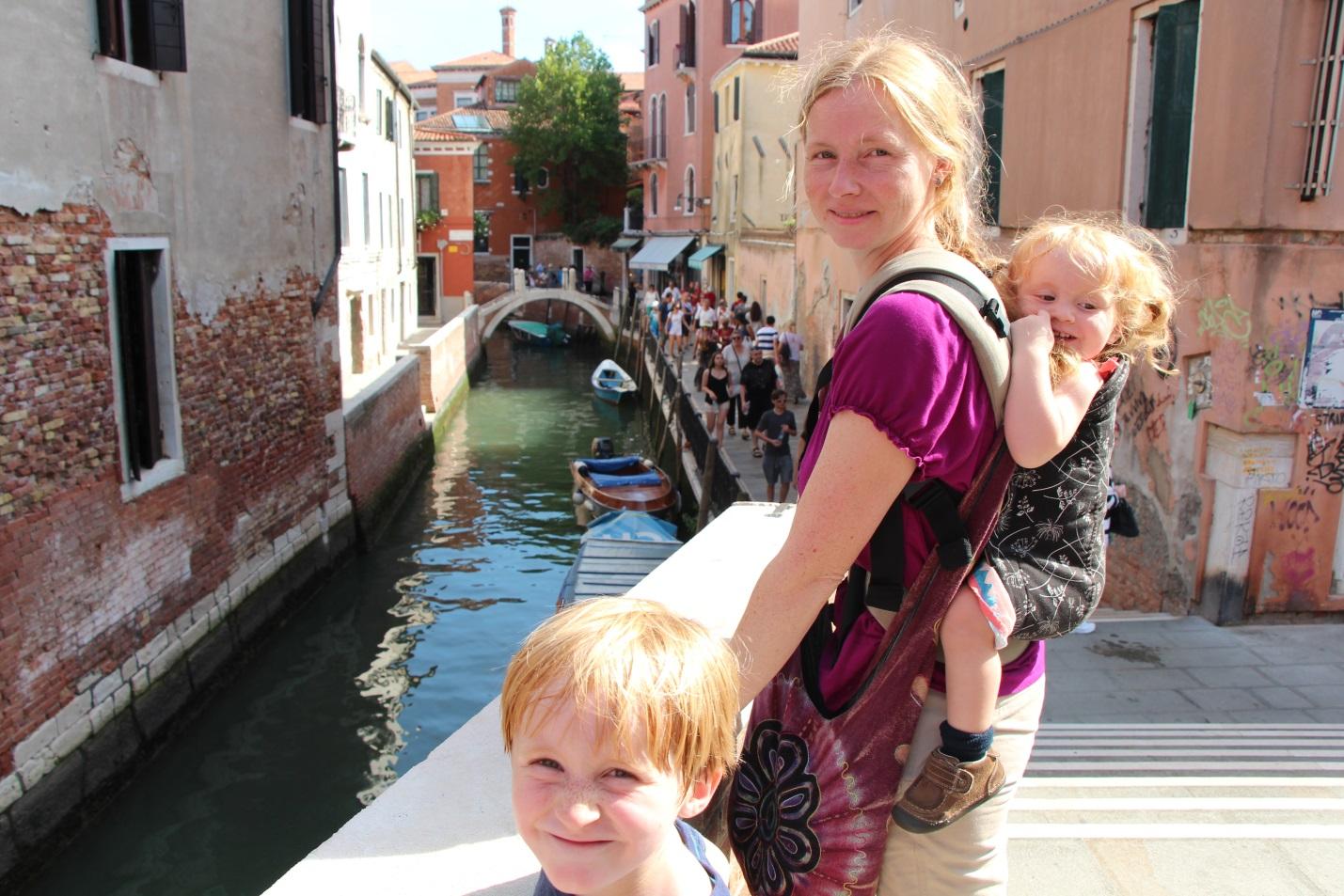
Mom, toddler, and big brother all stand atop one of the many bridges in Venice, the canal can be seen below
 
2.Naps on the go:  In addition to normal napping, babywearing allowed my daughter to conk out whenever needed as she adjusted to the 6 hour time difference. She could sleep contentedly on my back (or front), and we could keep sight-seeing or go out to dinner—a win for everyone.
 
3.Art museums and glass shops:  No one wants a one-year-old running free when priceless works of art or breakable merchandise abound. No better way to contain the child and still experience the artwork than to toss the toddler into a carrier. An added bonus is that having the baby up at your level allows you to share what you are seeing with one another.
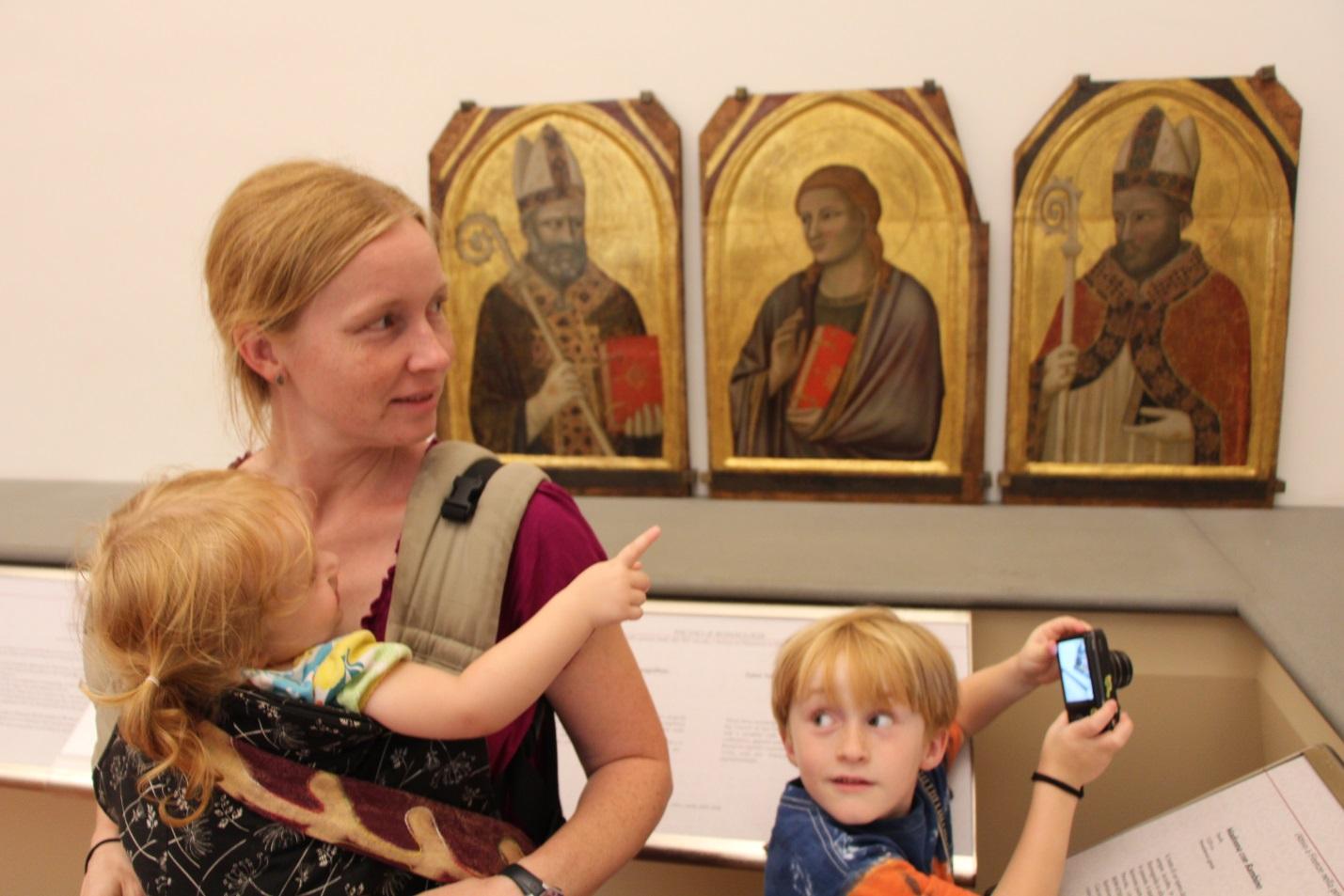
 

Toddler in front in SSC pointing to art with brother at art museum with religious icons in the background


4. Transportation:  This trip involved a lot of transit time in a variety of vehicles, and babywearing helped us get through the airport, to the train station, or onto the water bus with ease. It freed up our hands to carry bags and kept the baby content and contained as we traveled around.
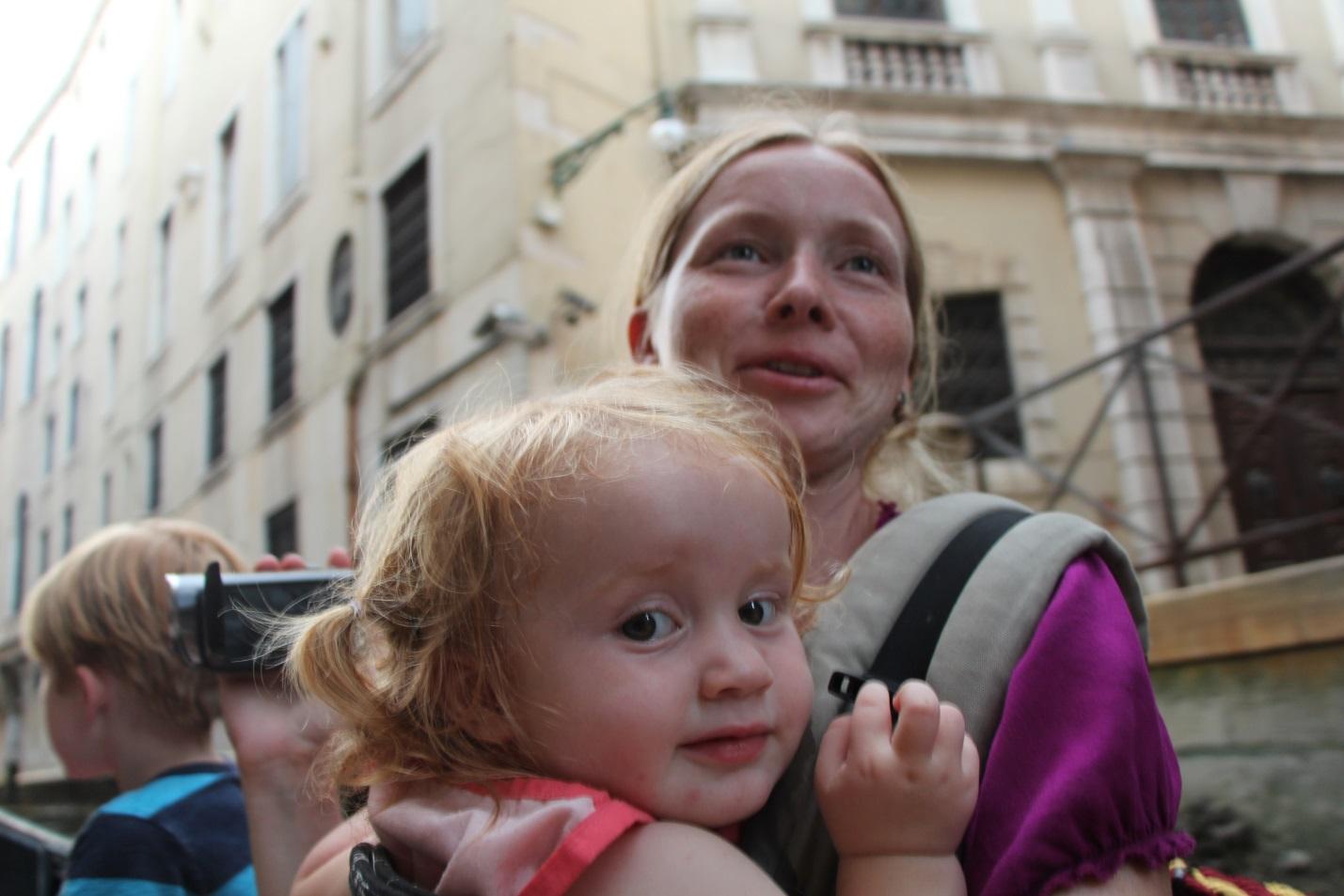
Toddler in front in an SSC on a gondola ride in Venice, Italy
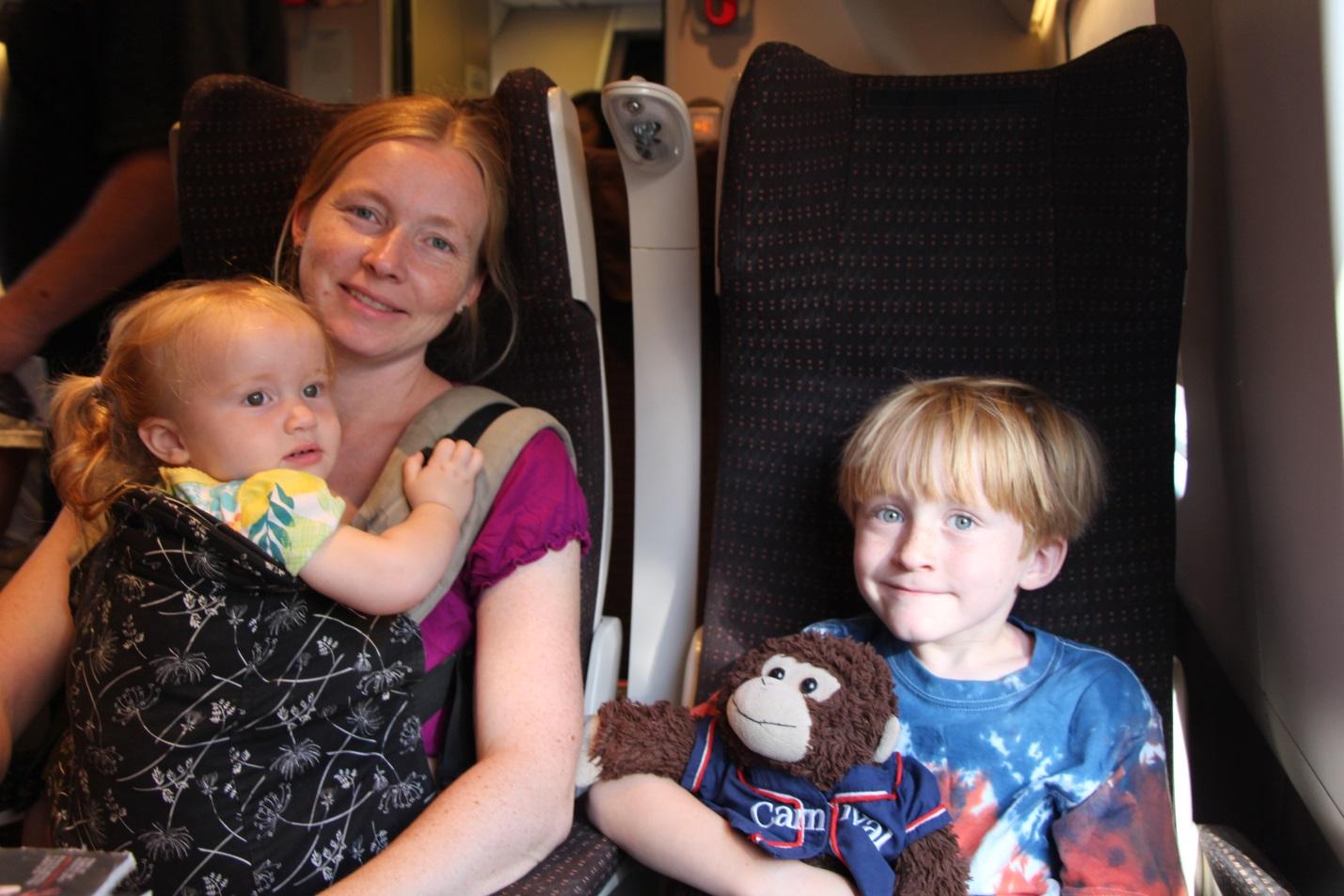
Toddler in SSC next to 6yr old brother on train to Florence
 
 
5. Climbing stuff:  Some of the most fun things we did on this trip, especially from the perspective of my 6-year-old, involved climbing bell towers and the Duomo (dome) in Florence. Taking my toddler up the hundreds of steps through narrow passages would have been basically impossible (and unsafe) had she not been securely strapped to my back.
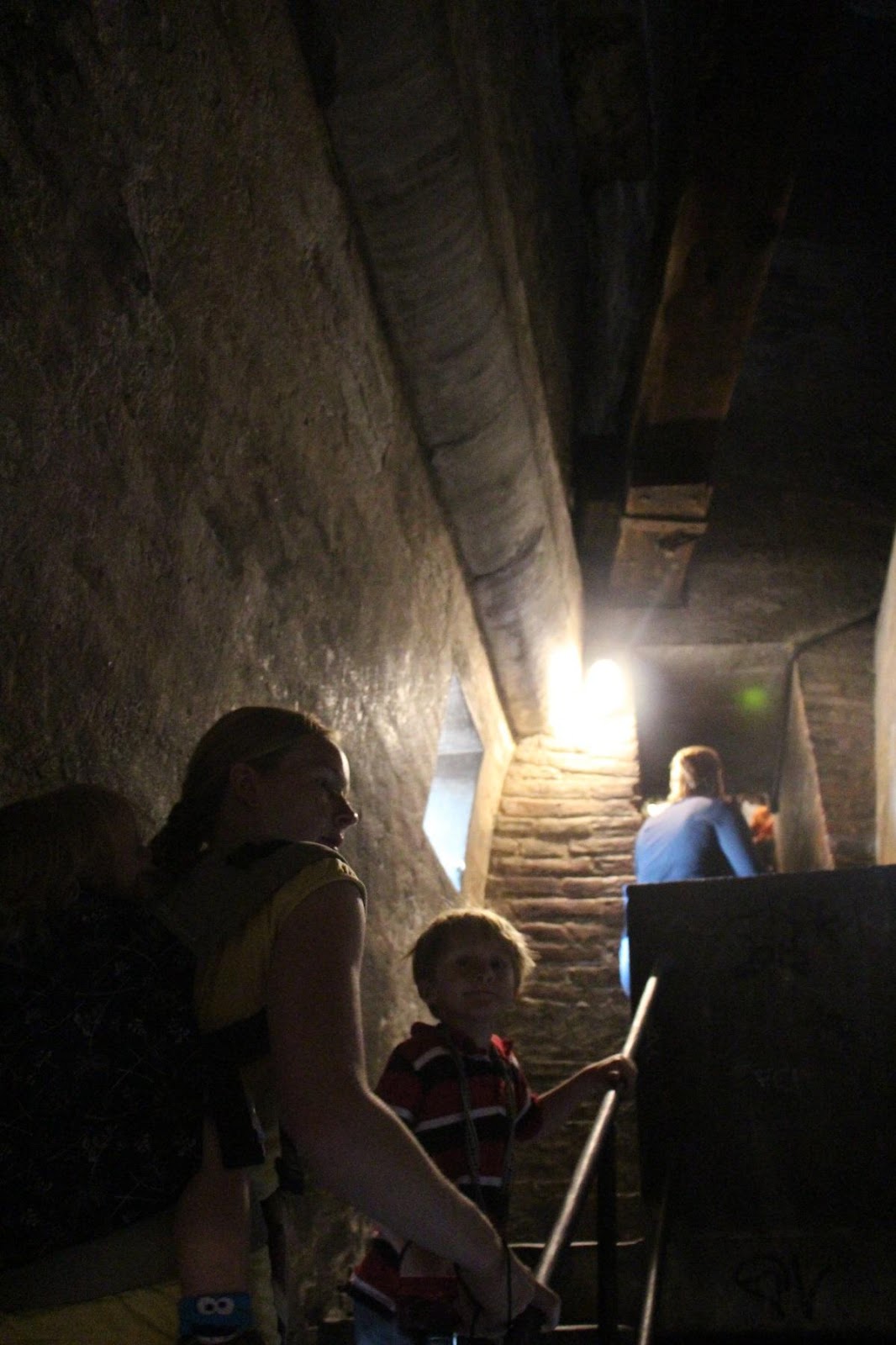
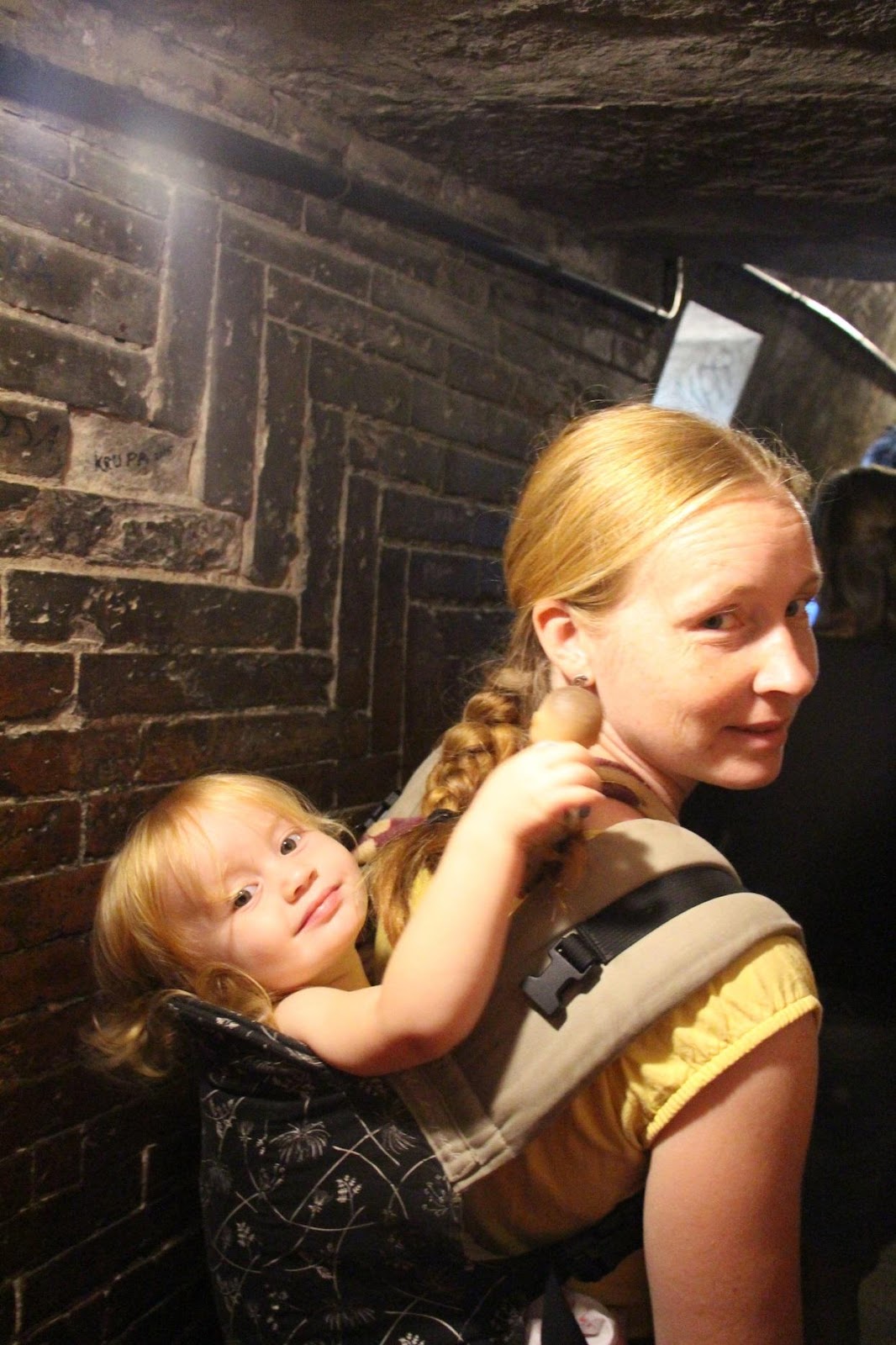
Toddler barely visible on back following 6yr old in a dark narrow staircase climbing the Duomo in Florence, Italy

 
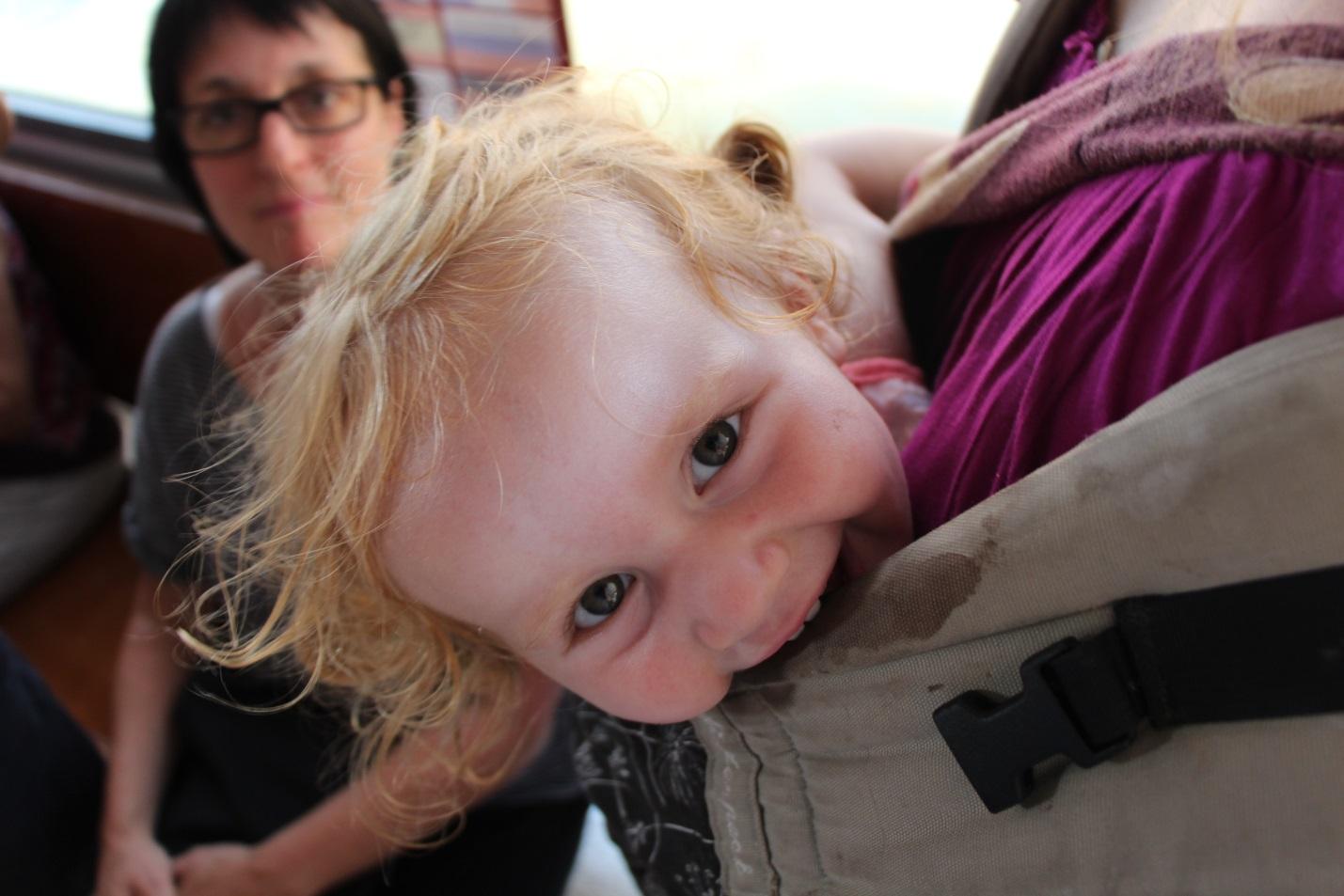
Toddler grins in SSC in dark hallway climbing Duomo in Florence

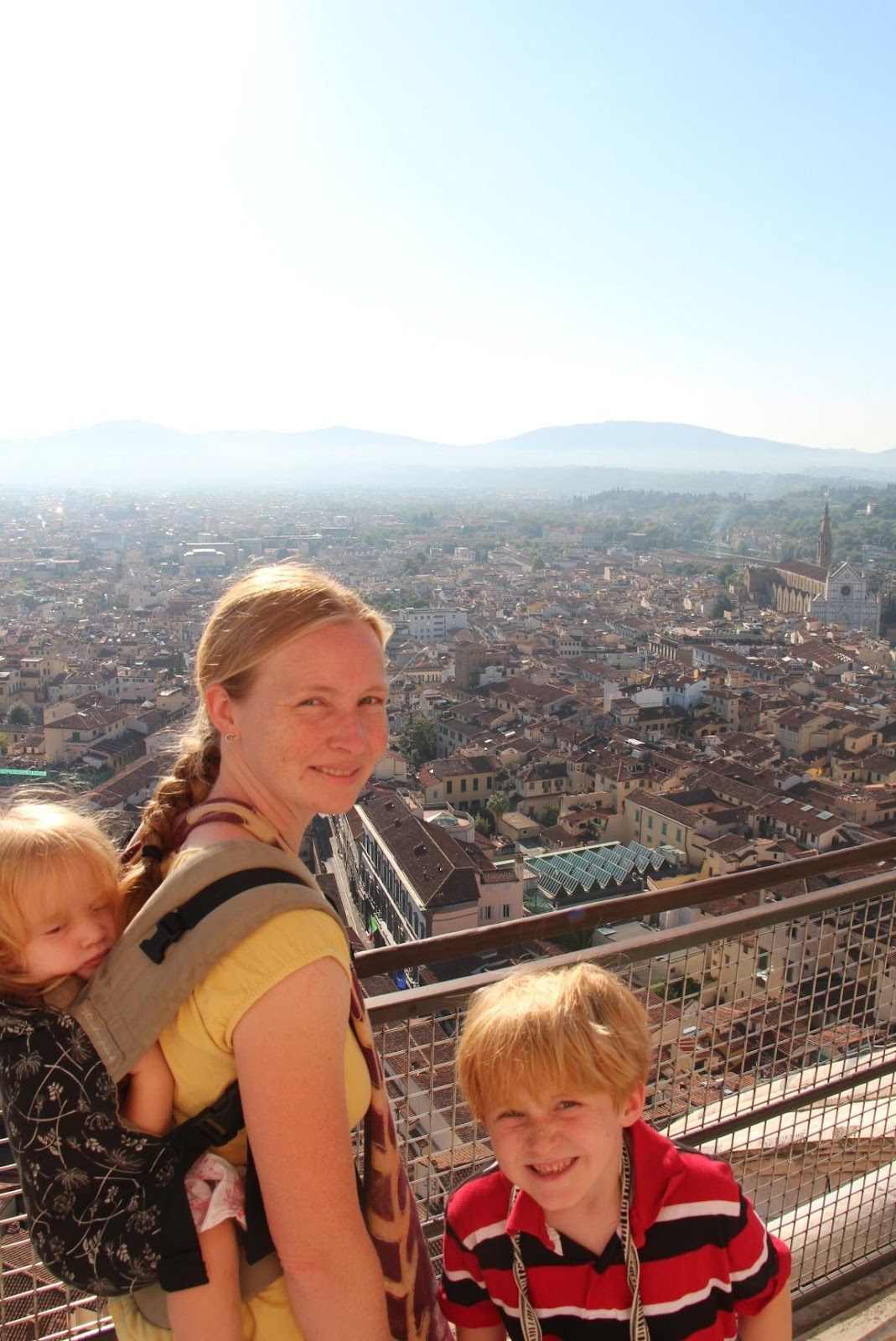
Mom with sleepy toddler on back and beaming 6yr old boy atop Duomo after climb,
the city and mountain view spreads below

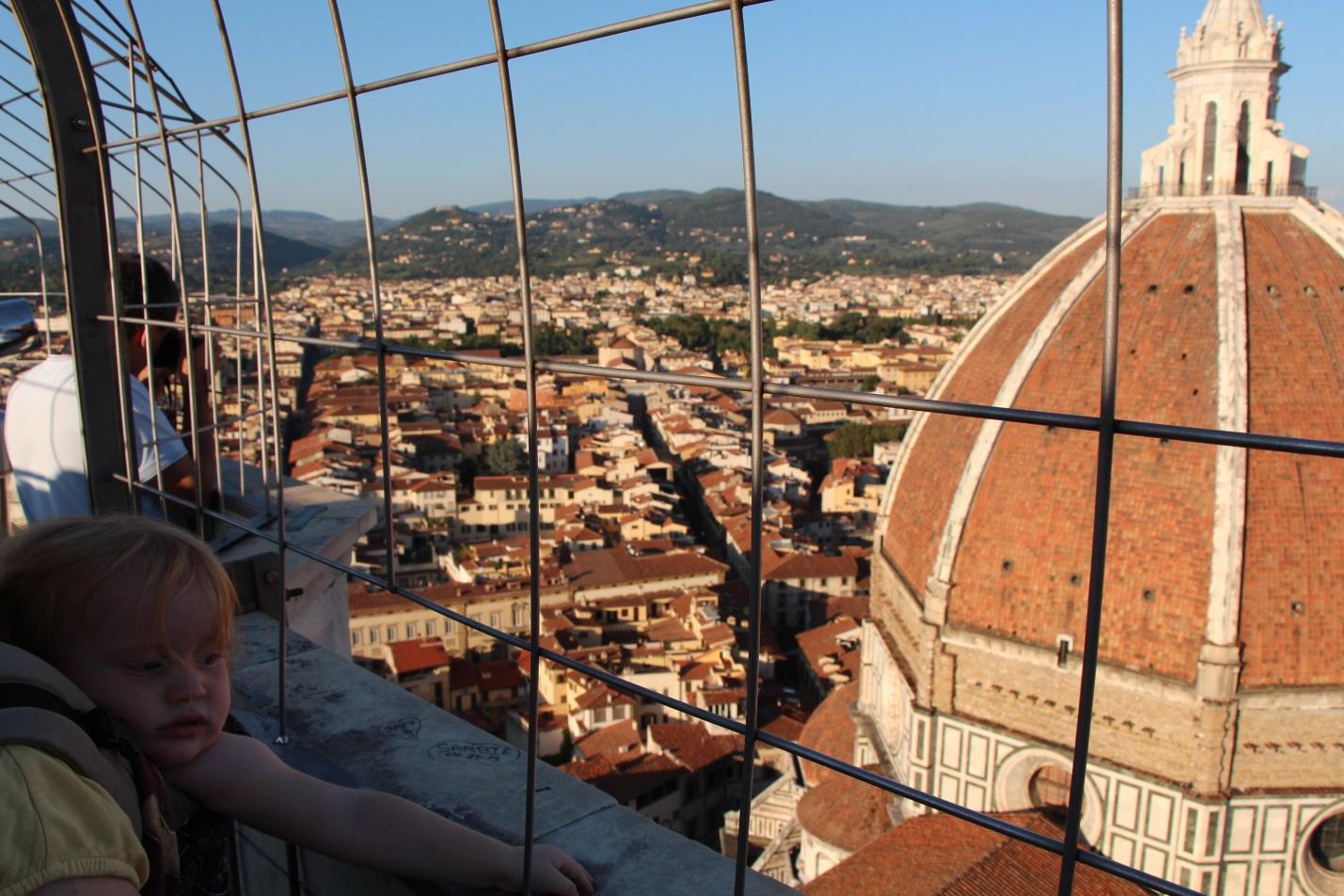
Toddler can be seem reaching towards the view atop the bell tower in Florence with a church dome and the city beyond
 
6. Crowds:  August in a crowded time of year in Europe, and keeping my baby close and safe in a carrier (and not needing to fight my way through the crowds with a stroller) was invaluable.
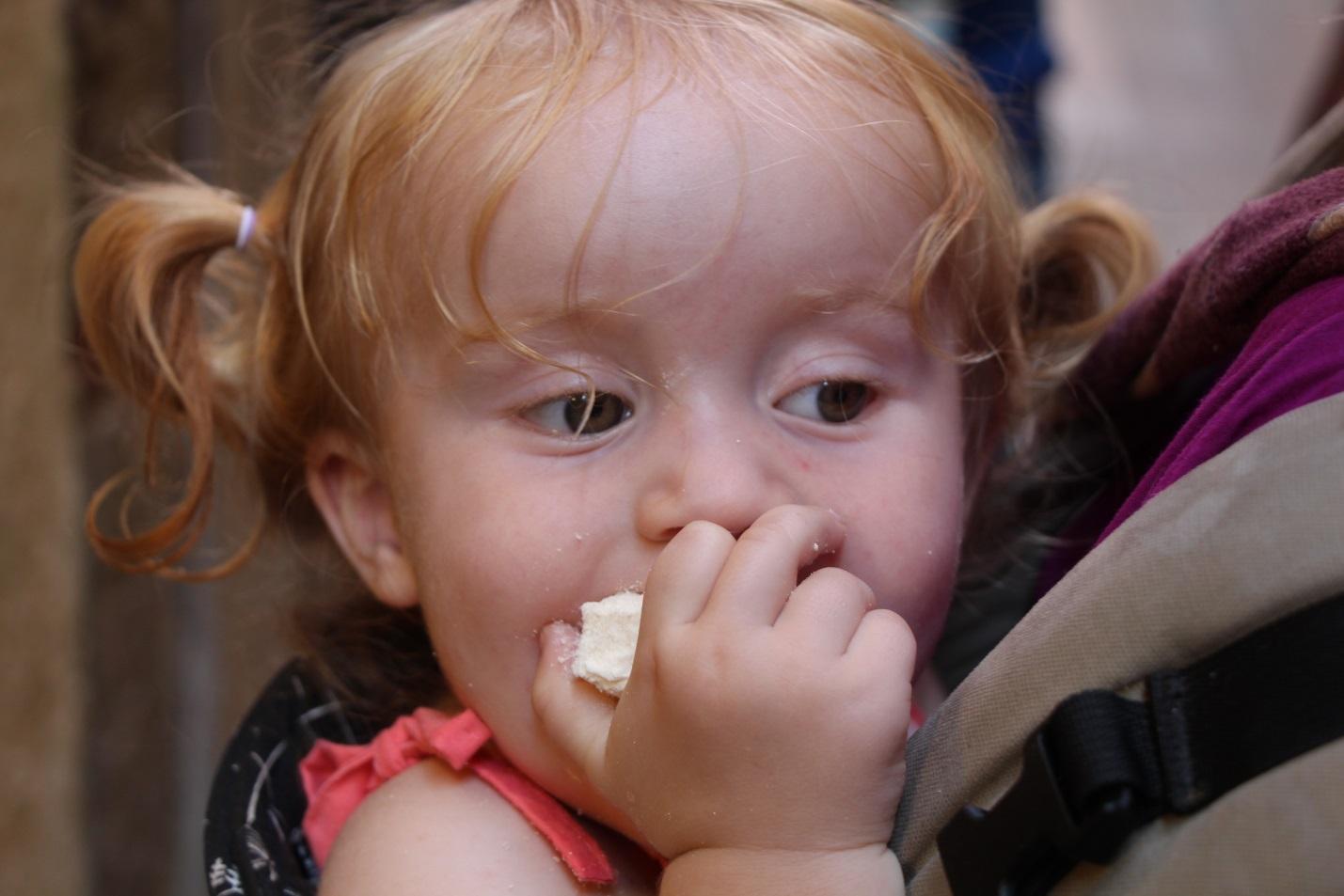
Toddler enjoys a snack from the safety of mom's back during the trip
 
 
7. Sharing:  As is always a benefit of babywearing, having my daughter up on our level, where we could tell her about what we saw and listen to her reactions to what she was experiencing, meant that she came on this trip as an active participant (albeit a young one), and we got to share the places and sites with her up-close. Fun examples include when she noticed an elaborately decorated ceiling in the Vatican Museum and proceeded to point it out to us from my back saying, “See? See?” and her signing “horse” (with sound effects) when she noticed statues of horses.
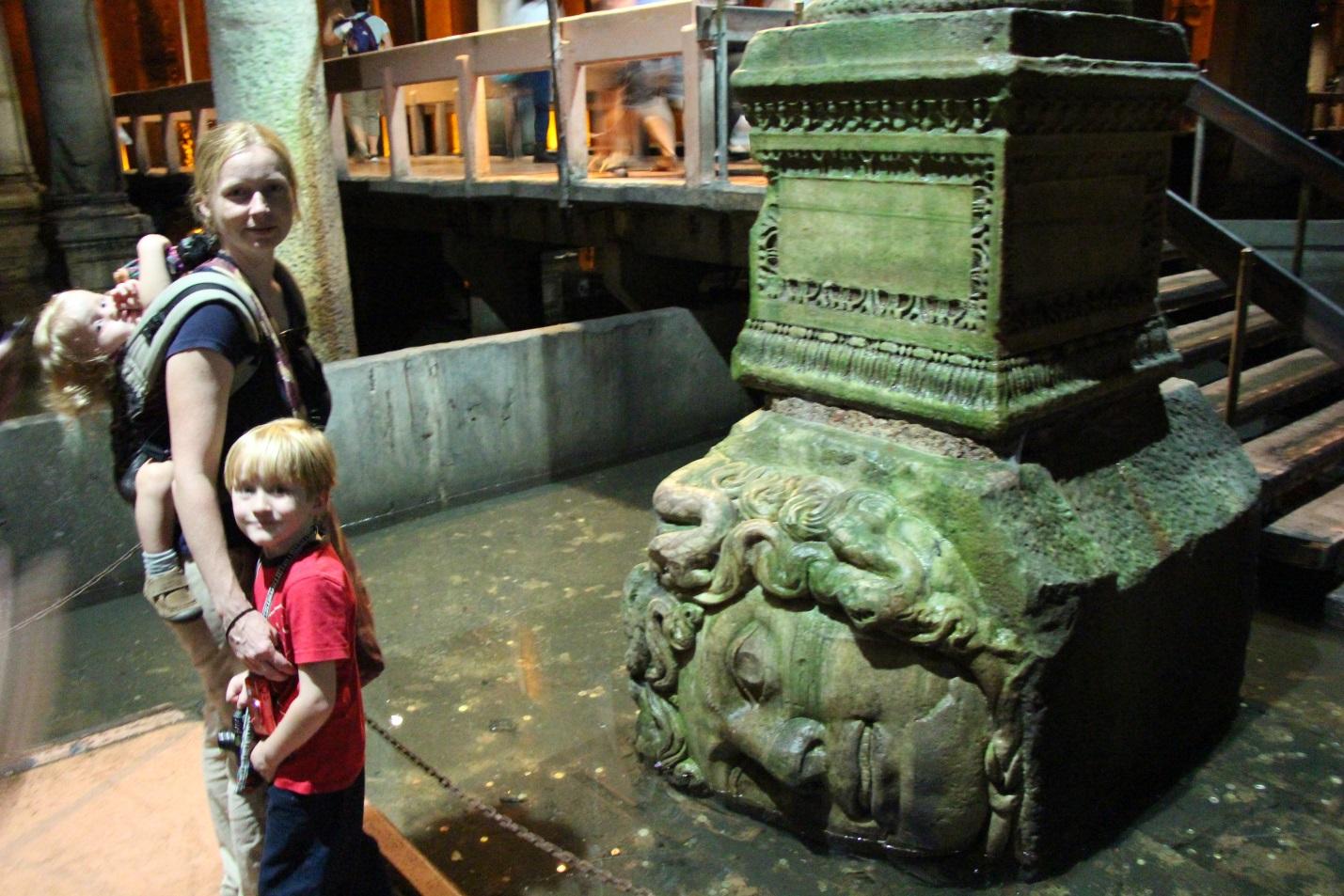
Back wearing underground in the Basilica Cistern in Istanbul, Turkey
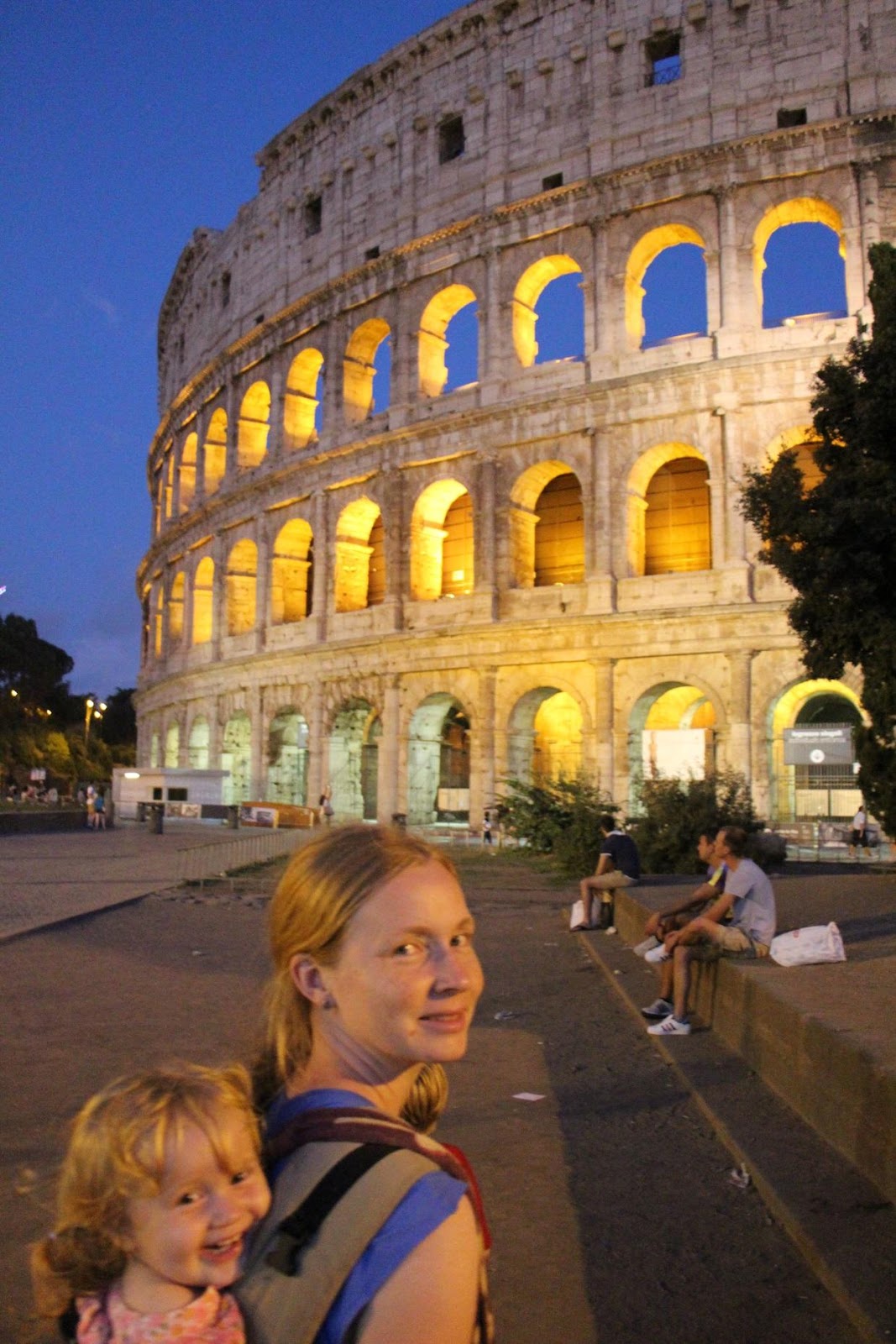
Toddler on mom's back as they stand before the lit Colosseum in Rome in the evening
 

8. Peace of mind and lack of worry:  This one is difficult to articulate, but having babywearing as a tried and true option made situations on this trip that might have seemed complicated or problematic with a toddler, non-issues.
All in all, it was a fantastic trip, and babywearing was an invaluable asset that helped make it that way.

-Genevieve


Monday, June 29, 2015

Only YOU Can Prevent Carrier Abuse

Our carriers are important tools in our parenting toolbox, but sometimes we forget that they are just cloth and shouldn't be treated as unbreakable.  Today we will learn from the abusive behavior others have accidentally subjected their carriers to in order to learn what to avoid.

Activity Abuse
Once our kids are toddlers, we have to find a way to carry carriers that aren't in use.  Some place them in the cart at the store.  This can result in carriers being accidentally left behind.  So, other parents choose to leave the carrier on their body hanging behind them.  This seems like a good solution, but you must be very cautious that the carrier does not get caught on something.

Soft Structure Carrier strap caught on railing as wearer continues walking
Stories abound of carrier straps caught on door knobs, railings, park benches, playground equipment, and more.  The wearer continues moving and can cause too much pressure on the carrier in a direction it is not designed to handle.
This Kinderpack was hanging behind the wearer when she went down a slide
at the playground.  It tore nearly in half.
When not using the carrier, it is best to either roll it at your waist or put the straps back on your shoulders to keep it from catching on environmental protrusions.  Or plan to bring a tote bag that it can go in when not in use.

Car Doors
Car doors can cause the same damage if a carrier around your waist is caught as you walk away, but the more common car door damage comes when the wearer places the carrier in the car and leaves a strap caught in the door.
Example of a strap left hanging out of a car door

Broken waist strap buckle on a Soft Structure Carrier

Buckles often are broken in car doors. 

Straps can be ruined dragging on the road as you drive.
The strap of this mei tai got wrapped around the wheel and tore completely out
 of the carrier with what the owner described as a terrifying pop
This SSC strap was dragged on the highway and completely destroyed the webbing

Food/Paint/Marker Abuse
The look of a carrier can quickly be destroyed by incautious behavior around foods, paints, or markers.  I've heard stories of carriers in the car that had a crayon thrown on them by a child which then melted all over the carrier in the heat. 

Mysterious blue stain on white carrier
 
Children and Pets
Children and pets can be very abusive to your carriers.  Cats, dogs, and rabbits to name a few have teeth, claws, and can very quickly destroy your favorite carriers.  It is important to store your carriers up off the floor where dogs cannot reach, or inside a drawer or bin to keep cats and other climbers away.  Velcro can also cause similar damage to cat claws, so be careful around Velcro items.
The guilty furry friend with the mei tai he snacked on behind him

This wrap is torn and has multiple holes thanks to a dog's teeth

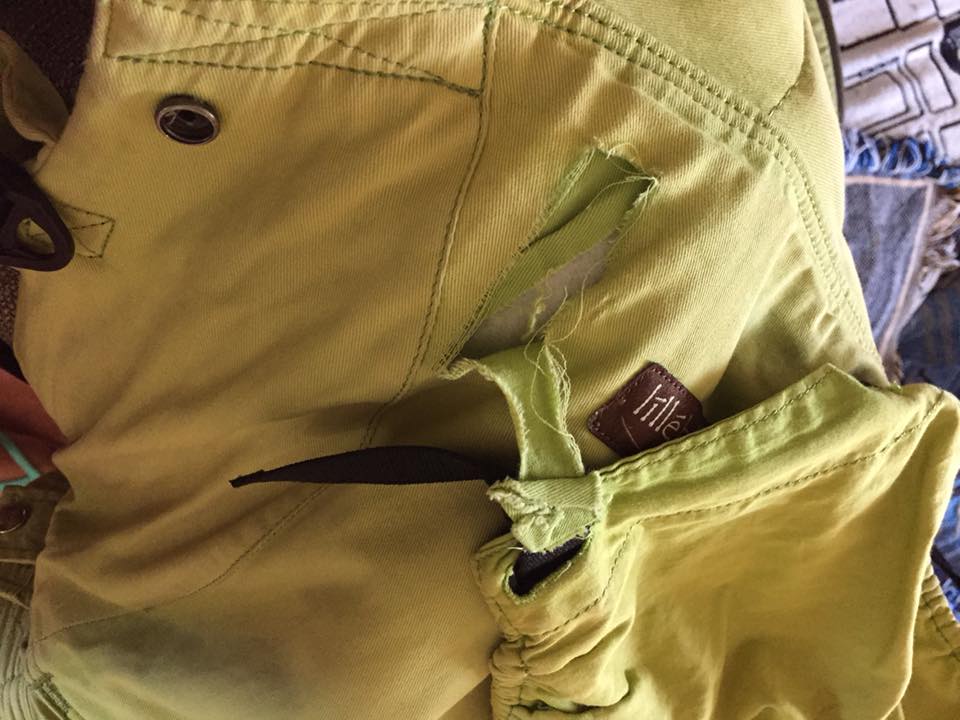
The hood of this carrier tore off when the owners 4yr old pulled down on it while in use.
 
 
Laundry Disasters
Often people complain that the laundry recommendations for carriers seem excessively challenging.  However, carriers can and do get destroyed by improper washing.  Washing different types of carriers together can lead to buckles or zippers catching on fabric from wraps or slings.  Always wash carrier only with like styles and colors.
This linen wrap developed a large hole as the owner reached to make a seat.
 Linen dislikes hard water and the deposits can abrade the fibers causing tears.
This hemp wrap was exposed to excessive heat in the dryer.  It became brittle and easily tore.
 
Wool wraps will felt if wash improperly which means the fibers shrink and get fuzzy. 
This will make the wrap unsafe for use.
The agitator in top load washers can damage wraps and mei tais especially.  It is important to use a setting with minimal agitation for carriers.  Bleach can eat away at fabric even after the initial color damage is done.  Colors from multiple color carriers can sometimes run in the wash.  Shout Color Catchers are a good solution to this laundry disaster.
 
As you can see, there are many things you can do to cause your favorite carrier to be destroyed without meaning to damage it.  It is important to be on the lookout for potentially abusive behavior so that you can prevent damage before it happens.  Because only you can prevent carrier abuse.
 
Posted by Ann Marie
Thanks to all who provided pictures for this article (especially BWI of Phoenix)


Wednesday, March 25, 2015

Why don't you recommend? SSC High Back Carries

Today we are starting a new feature.  We are going to explore common suggestions that we don't recommend.  In this post, we are going to cover why we don't recommend high back carries as a standard carry in a soft structured carrier.  The biggest reason is that it is not how the carriers are designed to be worn.  Because soft structure carriers use a heavily padded waist band designed to distribute the weight onto your hips, buckling well above your hips loses that benefit.

Other troubles the can occur when using this method are highlighted below.

 
With the waist just beneath the bust, it doesn't have anything to keep it from sliding down your body as the day wears on.
 
 
Fabric becomes trapped under the child's bottom or hangs way over the waistband making either a poor seat or an overly deep seat.

 
Because of the fabric lost under the bottom, the back of the carrier does not come as high on the child as it could.  The wearer also may not be able to tighten the straps sufficiently.  This mother has the straps as tight as they will go and wants them tighter.

Contrast the same child worn with the same carrier at her mother's waist.


The child has a much better seat, she has support all the way up her back, and her mother can get a much tighter fit with her straps.  You can also see the child feels more confident and supported in the carry because in the earlier photo she was holding on to her mother, whereas she has relaxed in this carry.
 
 
Does this mean that if you have a buckle carrier that you like wearing under the bust we are saying you must stop?  No, of course not.  But if you ask us to show you how to use an SSC on your back, we will not demonstrate a high back carry.  And if you come asking for a carrier to do a high back carry, we will recommend a mei tai or wrap as carriers better suited to the task.  There are a few buckle carriers with unstructured waists if you really want a higher back carry and buckles, but they still may not fit your body because of the tightening issue mentioned with the straps.  Hopefully this illustrates more clearly the pitfalls of this popular recommendation.

Thursday, July 8, 2010

Tutorial: Soft Structured Carriers

In this installment, we have videos for both front and back carries in a soft structured carrier.  Ann Marie apologizes if her hip scoot looks awkward, she doesn't hip scoot because it feels awkward to her, so it probably looks like it.  The sound is a little low, sorry, the videos were done in a park and there was enough ambient noise to make it hard to hear in some spots, but the methods are pretty clear even without the sound.  Hopefully they are useful to someone.